
7 Anxiety Physical Symptoms Your Body Shows When the Pain Inside Has Nowhere Left to Go
Please Read This First
An important medical note before we begin.
If you are experiencing severe chest pain, sudden and serious difficulty breathing, unexplained weight loss, fainting, or any new and alarming physical symptom, please see a doctor before reading further. No article can replace that step. The anxiety physical symptoms described in this article share overlap with several medical conditions that require proper clinical diagnosis. This piece is most relevant to people who have already been through medical evaluation, received clear results, and still cannot explain why they keep feeling unwell. Once physical causes have been properly ruled out, the conversation about emotional and psychological factors becomes genuinely worth having.
When the Body Starts Saying What the Mind Could Never Find Words For
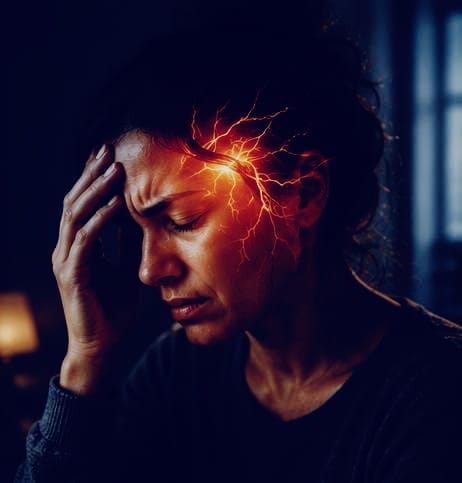
Ramsha is the kind of person others describe as composed. She has it together, people say. She holds things down. But most mornings she wakes up before her alarm with a headache already settled in behind her eyes. By the time she gets to work there is a tightness across her chest that sits with her all day, like something unfinished pressing from the inside. She has done the rounds. Blood work, an MRI, a cardiology referral, an ultrasound. Every report came back with the same verdict: nothing wrong. You are fine. But Ramsha knows she is not fine. The pain is too consistent, too familiar, too specifically hers to be nothing.
Adil is the reliable one. His family leans on him the way a building leans on its foundation. His mother’s anxiety, his father’s health, the needs of younger siblings who do not yet understand how much he is holding. He carries it without complaint, without asking, without letting anyone see the weight. But at night, when the house goes quiet and there is no one left to hold things together for, his heart starts racing. His breath gets shallow. Some nights he lies there genuinely convinced something is medically wrong. Two cardiologists have disagreed with that assessment. His heart is fine, they say. So what exactly is happening?
Here is what nobody told either of them. The pain is real. It is not performance, not exaggeration, not something they are imagining. It simply does not originate where they have been looking for it. The source is not structural. It is emotional. What they are living with are anxiety physical symptoms, the process by which emotional experiences the mind cannot fully hold begin expressing themselves through the body instead, borrowing the body’s vocabulary because the mind ran out of its own.

What Are Anxiety Physical Symptoms and Why Do They Happen?
Anxiety physical symptoms are the bodily experiences that emerge when emotional distress has no other outlet. Most people associate anxiety with racing thoughts, worry, or dread. But for a significant number of people, anxiety does not announce itself mentally at all. It arrives as pain, tension, breathlessness, nausea, fatigue, or a body that simply refuses to feel well despite appearing medically healthy. This is sometimes called somatic anxiety, a term that simply means anxiety showing up in the body rather than the mind.
The reason this happens is not mysterious, even if it feels that way from the inside. The mind and body are not separate systems that occasionally communicate. They are one continuous system that never stops communicating. Every emotional experience has a physical dimension and every physical state has an emotional one. When unprocessed emotion accumulates over time, whether from chronic stress, grief that was never fully felt, fear that was never acknowledged, or old experiences that left a mark before the person had language for what happened, the nervous system keeps holding all of it. And at some point, the body starts doing the holding instead.
It is worth being precise here: somatic anxiety and Somatic Symptom Disorder, which is a formal clinical diagnosis, are related but not always the same thing. Modern diagnostic systems do recognise conditions in which persistent anxiety physical symptoms are significantly influenced by psychological distress. But a formal diagnosis requires clinical assessment by a qualified professional. What this article explores is the broader, lived experience of a body carrying more emotional weight than it was meant to carry alone, and what that tends to look like from the inside.
Anxiety Physical Symptom 1: Headaches That Come Back No Matter What You Take
Ramsha once told me: I have tried everything. Every tablet, every remedy, every trick I have read about online. Sometimes I get an hour of relief. Sometimes not even that. The MRI showed nothing. The neurologist said there was no structural cause. But it comes back every single day without fail.
Recurring headaches are among the most commonly reported anxiety physical symptoms. When something goes unsaid for a long time, when resentment or grief or unexpressed anger has nowhere to go, the head is often where the body first registers the pressure. These are genuine headaches, not imagined ones. They simply do not have a structural origin. What makes them identifiable as stress-related is the pattern: they tend to worsen reliably during conflict, difficult decisions, or emotionally charged situations, and ease when those pressures lift.
If you have noticed that your headaches are consistently worse on hard days and easier on quiet ones, that pattern is worth paying attention to. It is not proof of anything by itself, and other causes should always be considered first. But if medical evaluation has already drawn a blank, it is information worth bringing into a conversation with a mental health professional.
Anxiety Physical Symptom 2: Chest Heaviness and Breath That Catches Without Warning
Adil put it plainly the first time we spoke: it is like someone placed a stone on my chest and forgot to remove it. Breathing becomes an effort. My heart rate goes up for no visible reason. I have had every cardiac test available and the cardiologist has told me twice that my heart is in good shape. So I genuinely do not understand what this is.
Chest heaviness and shortness of breath are among the anxiety physical symptoms that frightens people the most, precisely because they overlap with cardiac presentations. Once serious cardiac conditions have been ruled out by a physician, these sensations can sometimes reflect the way unspoken emotion settles into the chest. The body holds what the mouth never said. The heaviness, the tightened breath, the racing pulse that arrives without a visible trigger. These are the body’s version of a feeling that has not yet been given a name.
These symptoms often intensify at night. The day keeps people occupied enough that the mind stays distracted. But when the house goes quiet and there is no task left to focus on, whatever has been held at bay during waking hours tends to surface. The chest is where a great deal of people feel it arrive.
Anxiety Physical Symptom 3: A Neck and Shoulders That Stay Locked No Matter How Much You Rest
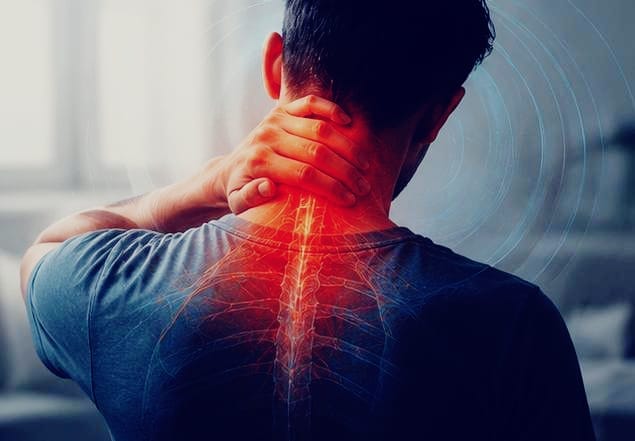
There is a reason the phrase carrying the weight of the world on your shoulders exists in almost every language. It did not become a metaphor by accident. When a person is managing too much for too long, when asking for help feels like a failure, when they are quietly absorbing what others offload without anyone noticing, the body tends to store that accumulated pressure in the neck and the space across the top of the back.
Ramsha was getting weekly massages because her neck would seize up to the point where turning her head became uncomfortable. The massage would loosen things for a few hours. By the next morning the same knot was back. That pattern, relief without resolution, is one of the clearest signs that a physical symptom is being maintained by something emotional. The muscle responds to treatment but the source of the tension is not in the muscle. It is somewhere older and deeper, and it does not respond to massage.
Anxiety Physical Symptom 4: Hands and Feet That Stay Cold Even When Everything Else Is Warm
When the nervous system is running in a state of sustained low-level alert, the body responds exactly as it would to any genuine threat. Blood flow gets redirected toward the organs and systems considered most essential for survival. The hands and feet, the furthest points from the core, receive less of it. The result is extremities that stay cold regardless of season or ambient temperature, and no amount of warming seems to hold.
The threat that triggers this response does not have to be external or visible. It can be the quiet background hum of long-carried worry. The unresolved situation that has been sitting just below the surface for months. The fear that has never been directly named. Adil mentioned it almost as a footnote: his hands were always cold. Blood work was completely normal. His family had assumed anaemia. But what no test was measuring was a nervous system quietly running an emergency response with nothing concrete to point to.
Anxiety Physical Symptom 5: A Stomach That Sends Warnings Before Your Mind Even Registers the Threat
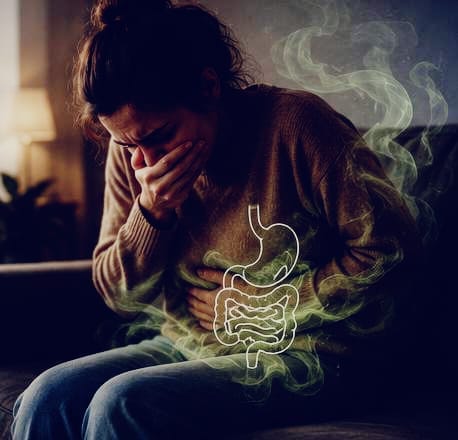
The gut and the brain are in constant conversation. The gastrointestinal system has its own extensive network of nerve cells, sometimes called the enteric nervous system, and it responds to emotional states with striking speed and specificity. Long before the conscious mind has processed that something stressful is approaching, the stomach already knows. This is one of the anxiety physical symptoms that appears earliest and most reliably.
Nausea, cramping, unpredictable digestion, the feeling of a meal sitting like lead. If medical evaluation has not identified a gastrointestinal condition responsible for these symptoms, emotional stress may be a significant contributing factor. Ramsha described it clearly: whenever she sensed a difficult conversation was approaching, even before a single word had been said, her stomach would tighten to the point where eating was not possible. That is the gut-brain connection making itself known in real time. It is not a character flaw. It is an alarm system running on a frequency most people were never taught to interpret.
Anxiety Physical Symptom 6: Breathlessness That Appears Out of Nowhere
You are sitting completely still. Nothing has happened. And then, without warning, the air feels insufficient. Your breathing becomes effortful. The thought enters your mind that something must be wrong, and the thought itself makes the breathing harder. This cycle is one of the most distressing of all the anxiety physical symptoms because it feeds itself.
Sudden breathlessness occurs when a suppressed emotion, fear or grief or anger, begins to rise without being invited. The nervous system triggers an immediate physiological response and the respiratory system gets caught in it. Once a doctor has confirmed there is no cardiac or pulmonary explanation, this kind of breathlessness is worth exploring as an emotional response rather than a physical one. Adil described sitting at rest, beginning to think about something difficult, and feeling his chest wall tighten before he had even fully formed the thought. The body was already responding to what the mind had barely touched.
Anxiety Physical Symptom 7: Exhaustion That Eight Hours of Sleep Cannot Fix
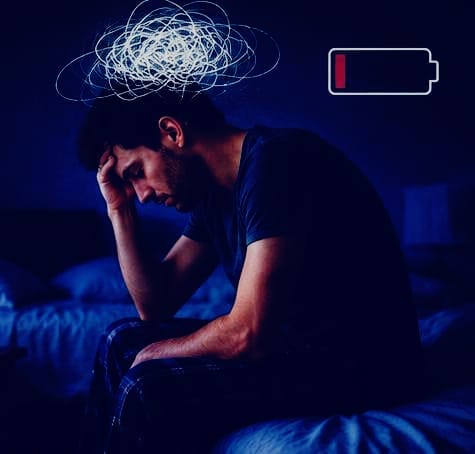
Ramsha once described it like this: I sleep a full eight hours. I wake up and I am as tired as I was when I closed my eyes. Like the sleep did not count.
Persistent fatigue has many possible causes and deserves proper medical investigation to rule out conditions like thyroid dysfunction, anaemia, or other systemic issues. Once those have been excluded, sustained emotional stress is one of the factors worth considering seriously. When the nervous system is in a prolonged state of low-level alert, it burns through energy continuously and invisibly. The person appears to be resting. Internally the system never stops working. The result is a fatigue that accumulates faster than sleep can replenish it, and which no amount of rest seems to touch.
Of all the anxiety physical symptoms, this is the one that is most easily dismissed, both by others and by the person experiencing it. There is no visible wound. There is no number on a blood panel that flags it. There is just a person who cannot seem to recover no matter how carefully they manage their sleep, and who has started to wonder if something is fundamentally wrong with them. Usually something is. It just is not what the tests have been looking for.

Ramsha’s Story: Three Years of Tests and Still No Answer
Ramsha was twenty-seven when she first came to see me. Her face carried the particular tiredness that belongs to people who have been unwell for a long time without anyone being able to explain why. There was also something quietly determined in the way she sat. She was not someone who gave up easily. She said: I have seen eight doctors over three years. Every single one tells me my results are normal. But something is wrong. I have always known something is wrong.
I asked her about her life rather than her symptoms. What slowly came out was this: her parents had separated when she was twelve. She had been the eldest child. Falling apart was not something she had been able to afford, so she had decided, at twelve years old, that she simply would not. Not then, not after, not ever. Fifteen years passed. Not one conversation in which she had said, plainly and to another human being: this was hard for me. This hurt me. I am still carrying this.
What presented as a cluster of unexplained anxiety physical symptoms was not a medical mystery. It was fifteen years of genuine pain that had never been witnessed. As we began working together and Ramsha began putting language to things that had only ever lived in her body, the headaches started arriving less often. The chest heaviness began to lift on some days. The body does not hold on indefinitely once the mind finally agrees to look.
Adil’s Story: The Weight of Being the Strong One
Everyone who described Adil used the same word: responsible. He had heard it so often it had become part of his identity. Being the one who held things together was not something he did. It was something he was. But when he sat across from me for the first time, his hands had a slight tremor in them. The kind that comes not from weakness but from holding too tightly for too long.
He said: I have never once told anyone that I also needed something. I thought if I admitted that, if I showed even a crack, the whole thing would fall apart. So I kept everything inside. He had not cried in years. He had not complained. He had simply absorbed, continuously and without acknowledgement, and told himself that this was what strength looked like. Meanwhile every anxiety physical symptom in his body was telling a different story.
I asked him a question he had not been asked before: if a close friend of yours was carrying exactly what you are carrying right now, what would you tell him? He was quiet for a long time. Then, slowly: I would tell him that needing help is not the same as failing. Something shifted in the room when he said that. He had finally applied to himself the same compassion he had always extended to everyone else. That was where his recovery actually began.
Why So Many People Live With Anxiety Physical Symptoms for Years Without Knowing What They Are
In cultures where emotional restraint is treated as a virtue, the body becomes the only place feelings are permitted to exist. Men who cry are called soft. Women who name their pain are told they are being too sensitive. Children who show fear are taught to push through it. Across years and decades the message is consistent: what you feel is inconvenient. Keep it inside.
So people do. The feelings do not disappear. They find somewhere else to live. They settle into muscle tension, into the gut, into patterns of pain and fatigue that confuse doctors because they do not show up on scans. Conditions in which persistent anxiety physical symptoms are driven by psychological distress are recognised in modern clinical practice, but they remain significantly underdiagnosed in many parts of the world. Part of the reason is structural: a short appointment does not leave much room for the question that might actually matter, which is what has this person been carrying and for how long.
What Actually Helps: Five Approaches That Make a Real Difference
- Pause before the painkiller
The next time an anxiety physical symptom arrives, spend sixty seconds with it before reaching for something to make it stop. Not to suffer through it, but to ask: what am I feeling right now that is not physical? What has been sitting with me today that I have not looked at directly? Sometimes the discomfort has an emotional address, and naming that address is the beginning of something genuinely useful. - Give your feelings somewhere to go outside your body
Writing in a journal, speaking honestly with someone you trust, or working with a therapist. Any of these creates an outlet for emotion that would otherwise stay stored in the body and continue driving physical symptoms. When a feeling gets language, the body no longer has to hold it alone. This is not a metaphor. It is one of the most consistent findings across decades of mind-body research. - Learn to use your breath deliberately
Four slow counts in, hold for four, four counts out. Done with intention and at a genuinely slow pace, this pattern sends a direct signal to the autonomic nervous system that the threat has passed. It is one of the few things a person can do that has an immediate, measurable effect on the body’s level of alert. Practised regularly over weeks, it genuinely reduces the baseline intensity of anxiety physical symptoms. - Move the body to move what is stuck inside it
A walk. Gentle stretching. Swimming. Any sustained physical movement that is not punishing. The body processes held emotion through movement in a way that sitting still does not allow. It is not about fitness levels or how far you go. It is about giving the nervous system somewhere to go with what it has been quietly accumulating. - Consider working with a mental health professional
If anxiety physical symptoms have been present for months and medical evaluation has not found a clear physical cause, therapy is worth pursuing. Approaches that work specifically with the mind-body relationship have a strong track record with this kind of presentation. Asking for professional support is not a last resort. It is usually the most direct route to actually getting better.
Questions People Often Ask
Are anxiety physical symptoms real pain or is it all in your head?
The pain is real. This needs to be said plainly because it is widely misunderstood. Psychosomatic does not mean imaginary. It means originating in the relationship between the psychological and physical systems. The experience itself, the headache, the chest pressure, the fatigue, is entirely genuine. What differs is not the reality of the symptom but the mechanism producing it.
Can anxiety physical symptoms be fully resolved or do you just manage them forever?
For most people who get the right support and do the underlying emotional work, the physical symptoms reduce significantly and often resolve entirely. It takes time and honesty and the willingness to look at things that have been avoided. But the body does not indefinitely hold what the mind has genuinely processed. Recovery is not just possible. For many people it is complete.
Can children experience anxiety physical symptoms too?
More often than most people realise. Stomach pain every Sunday night before school. Headaches on the morning of a difficult test. Falling ill at the start of a stressful week. Children express emotional experience through the body even more readily than adults because they often lack the language to name what they are feeling. The body fills in where words have not yet arrived.
I want to see a therapist but I feel embarrassed. What do I do with that?
The embarrassment is worth examining because it is usually protecting something. Often it is the belief that needing support is weakness, or the fear of what it might mean to actually sit with certain things. But consider this: you have been living with these anxiety physical symptoms long enough to read this far. The courage required to keep going without answers is already far greater than the courage it takes to make one appointment.

A Final Word
Your body has not been performing. It has been communicating. Every anxiety physical symptom, the persistent headache, the chest that will not lighten, the hands that stay cold, the exhaustion that sleep cannot reach, has been a message from a system that has been carrying more than it was built to carry alone.
Ramsha is doing better now. Not because anything in her circumstances changed dramatically but because she finally gave herself permission to feel what she had been feeling for fifteen years. Adil is doing better too. Not because he stopped being the person his family relies on but because he stopped pretending that being relied upon costs nothing.
If you have been living with unexplained physical symptoms and every medical door has closed without an answer, the next door worth opening is an internal one. Not because the pain is in your head. But because that is where its roots are, and roots need to be reached.
Your body has been trying to reach you for a long time. This might be the moment you finally reach back.
If this reached you, pass it on.
Share this with someone in your life who keeps hurting with no explanation. Someone who has done all the tests and still does not know why they feel the way they feel. You might not be able to fix what they are going through but you can give them a name for it. Sometimes that is the thing
Pingback: How to Calm Your Nervous System: 6 Science-Backed Ways
Pingback: The Pressure to Provide: 3 Truths Every Man Hides